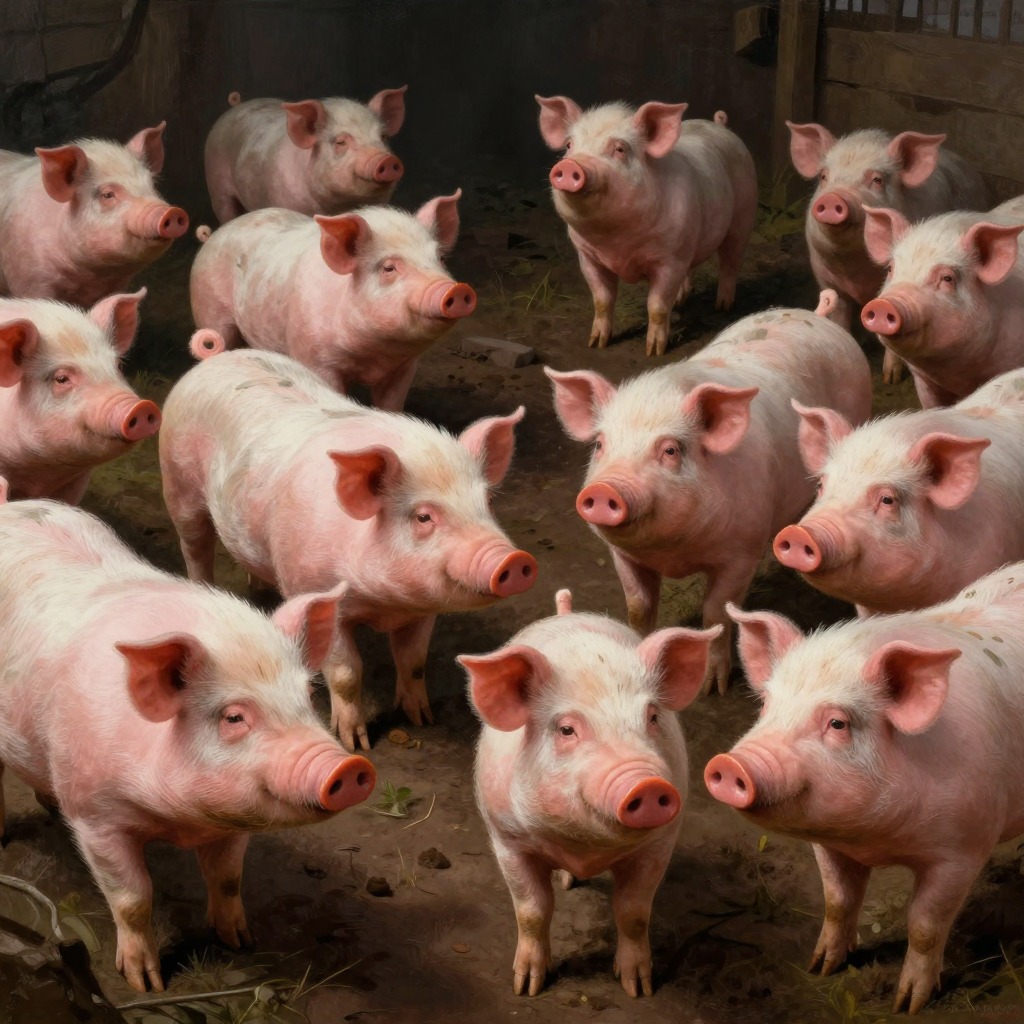
No animal shall sleep in a bed
The Fourth Commandment, "No animal shall sleep in a bed," was one of the original Seven Commandments painted on the end wall of the Big Barn by Snowball shortly after the expulsion of Mr. Jones. It formed part of the unalterable law that was to govern Animal Farm forever, embodying the principle that animals must not adopt the habits of human beings. The commandment was written in great white letters that could be read thirty yards away, and the cleverer animals at once began to learn it by heart.
Origin and Original Wording
The commandment was derived from Old Major's speech, in which he declared that no animal must ever live in a house or sleep in a bed. When the pigs moved into the farmhouse and began sleeping in the beds, the other animals were disturbed. Clover, who thought she remembered a definite ruling against beds, went to the end of the barn and tried to puzzle out the Seven Commandments. Unable to read more than individual letters, she fetched Muriel, who spelled out the Fourth Commandment. It now read: "No animal shall sleep in a bed with sheets." Curiously enough, Clover had not remembered that the Fourth Commandment mentioned sheets, but as it was there on the wall, it must have done so. Squealer, who happened to be passing at that moment, attended by two or three dogs, was able to put the whole matter in its proper perspective. He explained that a bed merely means a place to sleep in, and that a pile of straw in a stall is a bed, properly regarded. The rule was against sheets, which are a human invention, and the pigs had removed the sheets from the farmhouse beds and slept between blankets. The animals were reassured and no more was said about the pigs sleeping in the farmhouse beds.
Amendment and Enforcement
The amendment of the Fourth Commandment was part of a broader pattern in which the pigs altered the Seven Commandments to suit their needs. The original wording had been "No animal shall sleep in a bed," but the addition of the phrase "with sheets" allowed the pigs to occupy the farmhouse beds without technically violating the law. This change was not openly debated or voted upon; it was simply presented as a fact by Squealer, who used his persuasive rhetoric and the implicit threat of the dogs to silence any doubts. The animals, unable to read the original wording for themselves and lacking any written record of the original commandment, accepted the new version. The amendment demonstrated how the pigs manipulated language to maintain the appearance of adherence to the principles of Animalism while actually subverting them.
Significance and Consequences
The alteration of the Fourth Commandment was a key step in the pigs' consolidation of power and their adoption of human privileges. It allowed them to live in the farmhouse, sleep in comfortable beds, and enjoy a lifestyle increasingly distinct from that of the other animals. The commandment's amendment also foreshadowed the eventual transformation of all the Seven Commandments into a single, cynical maxim: "All animals are equal but some animals are more equal than others." The Fourth Commandment, like the others, was ultimately rendered meaningless as the pigs abandoned all pretense of equality and embraced the very human vices they had once condemned. The commandment's history illustrates how revolutionary ideals can be eroded by the gradual, seemingly justified, accumulation of privileges by a ruling elite.